Difference Between RFP,RFI & RFQ
Jan 16, 2026
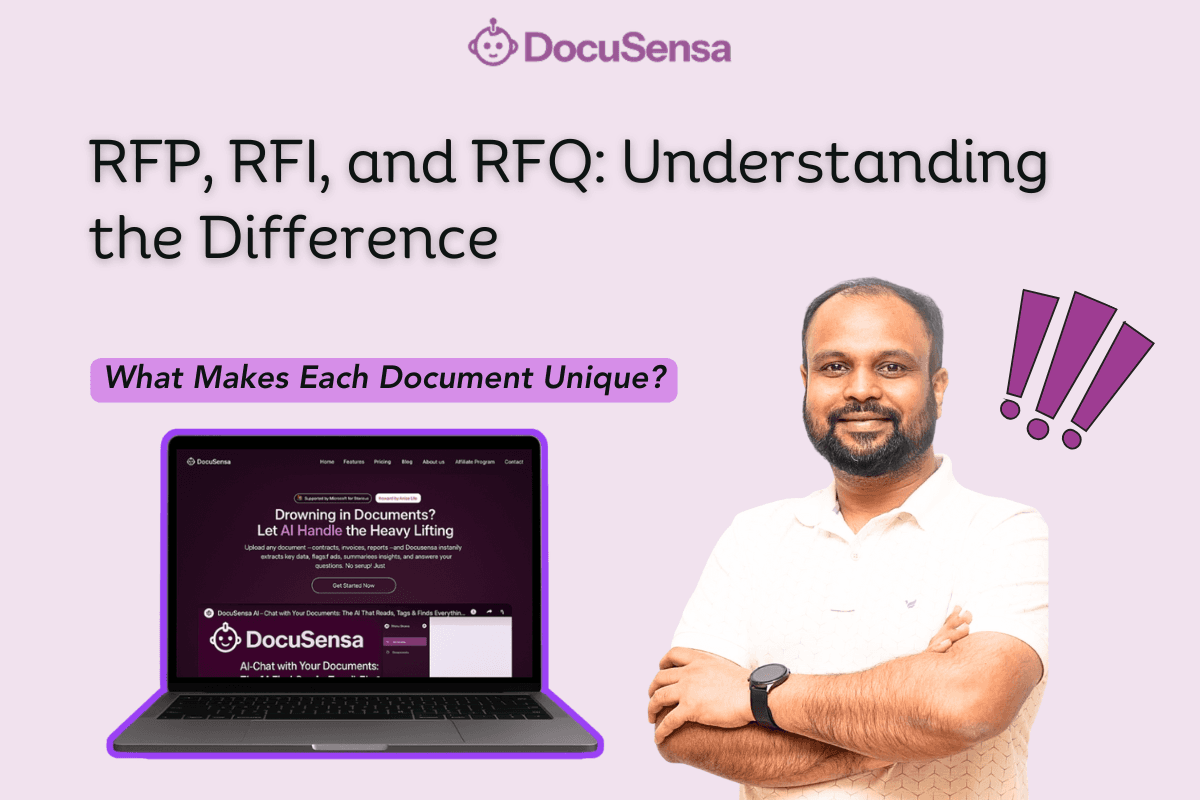
Table of Content |
|---|
What Makes Each Document Unique |
Request for Information (RFI): The Discovery Phase |
When to Use an RFI |
Best Practices for RFI Responses |
Request for Quotation (RFQ): The Price-Focused Approach |
When to Issue an RFQ |
Crafting Effective RFQ Responses |
Request for Proposal (RFP): The Comprehensive Evaluation |
Essential Components of RFPs |
The RFP Response Challenge |
How AI is Transforming Proposal Development |
DocuSensa's AI Proposal Platform |
Choosing the Right Document Type |
Best Practices Across All Documents |
The Future of Procurement |
Mastering the Procurement Language |
RFP, RFI, and RFQ: Understanding the Difference
In the complex world of procurement and business proposals, three acronyms frequently cause confusion: RFP, RFI, and RFQ. Whether you're a seasoned procurement professional or new to the bid and proposal process, understanding these distinctions is crucial for success. This comprehensive guide breaks down each document type, explores their unique characteristics, and shows how modern AI proposal generators are transforming how businesses respond to these critical requests.
What Makes Each Document Unique?
Before diving into the specifics, it's essential to understand that RFPs (Requests for Proposal), RFIs (Requests for Information), and RFQs (Requests for Quotation) serve different purposes in the procurement lifecycle. Each document type has distinct business proposal characteristics that dictate how vendors should respond and what information buyers expect to receive.

Request for Information (RFI): The Discovery Phase
Purpose and Timing
An RFI is typically the first step in the procurement process. Organizations issue RFIs when they're exploring solutions but haven't yet defined their specific requirements. Think of an RFI as a discovery conversation—the buyer is gathering intelligence about what's available in the market, who the qualified vendors are, and what capabilities exist.
Key Characteristics of RFIs
Information Gathering Focus: Unlike formal bid proposals, RFIs don't require detailed pricing or implementation plans. Instead, they seek high-level information about:
Your company's background and capabilities
Product or service features and specifications
Technical requirements and infrastructure needs
Industry experience and relevant case studies
Potential approaches to solving the business challenge
Non-Binding Nature: RFIs are exploratory and non-committal. Responding to an RFI doesn't obligate you to submit a formal proposal later, and buyers aren't committing to work with any particular vendor at this stage.
Less Formal Structure: RFI responses typically don't require the extensive documentation found in formal business proposals, such as a detailed business proposal executive summary or comprehensive pricing tables.
When to Use an RFI
Organizations typically issue RFIs when:
They're unfamiliar with available solutions in the market
They need to understand industry capabilities before defining requirements
They want to identify qualified vendors for a future RFP
They're conducting market research for strategic planning
They need to validate feasibility before committing to a project
Best Practices for RFI Responses
Even though RFIs are less formal, they're your opportunity to make a strong first impression. Focus on:
Demonstrating Expertise: Showcase your industry knowledge and relevant experience without overwhelming the reader with unnecessary detail.
Being Transparent: If you don't offer certain capabilities, be honest. The RFI stage is about helping the buyer understand what's possible, not winning a contract.
Keeping It Concise: Provide enough information to demonstrate value without creating a lengthy document. Most effective RFI responses range from 10-20 pages.
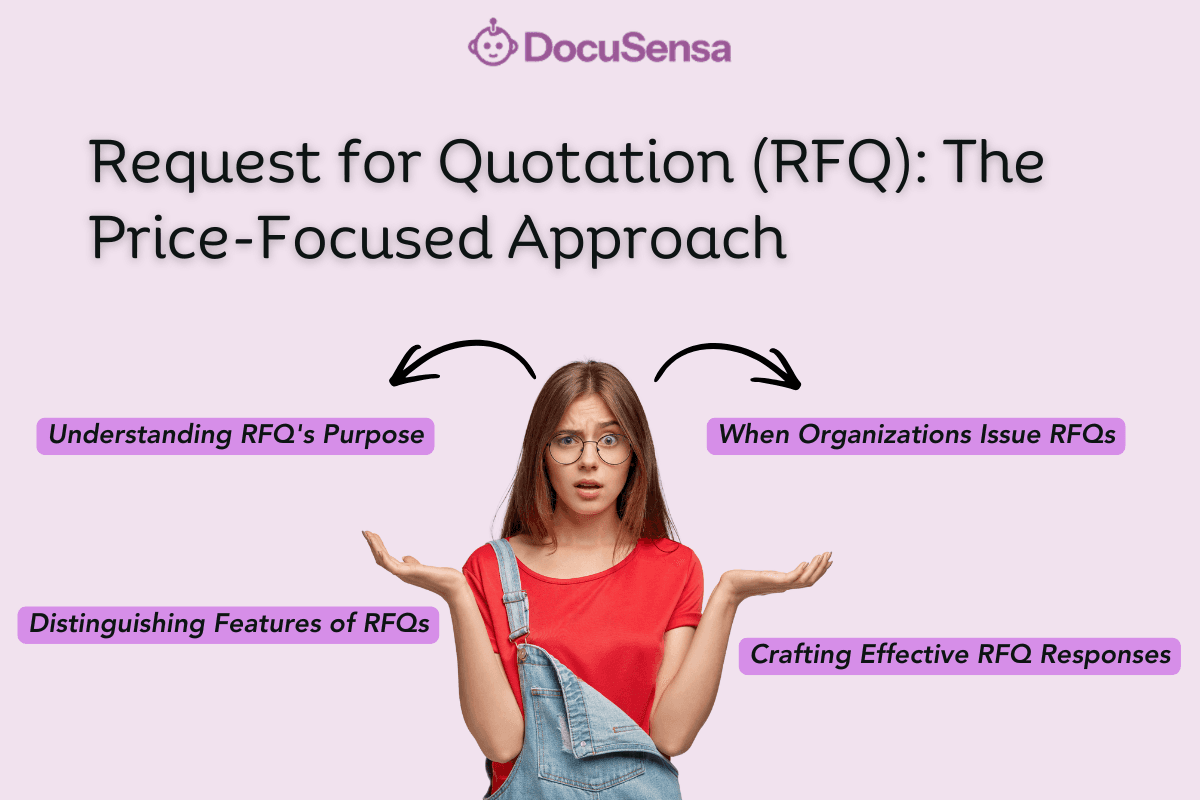
Request for Quotation (RFQ): The Price-Focused Approach
Understanding the RFQ's Purpose
An RFQ is a straightforward pricing request issued when the buyer knows exactly what they need. The emphasis is almost entirely on cost, with minimal focus on methodology or creative solutions. RFQs are most common for commodity purchases, standardized services, or situations where specifications are clearly defined.
Distinguishing Features of RFQs
Pricing Emphasis: The primary objective is obtaining competitive pricing for well-defined products or services. A bid proposal template for an RFQ typically includes:
Itemized pricing for each product or service
Quantity-based pricing tiers
Delivery timelines and associated costs
Payment terms and conditions
Warranty or service agreement details
Minimal Qualitative Content: Unlike comprehensive proposals, RFQs don't typically require extensive business cover letters for proposals or detailed capability demonstrations. Buyers already understand what you do—they just need to know your pricing.
Quick Turnaround: RFQs often have shorter response deadlines (sometimes just days) because they require less research and customization than RFPs.
When Organizations Issue RFQs
RFQs are appropriate when:
Product or service specifications are completely defined
The buyer has used the solution before and knows what to expect
Price is the primary differentiator
Standardized goods or services are being purchased
Quick procurement decisions are necessary
Crafting Effective RFQ Responses
Competitive Pricing Strategy: Research market rates and position your pricing competitively while maintaining profitability. Understand your true costs and margin requirements.
Clear, Organized Presentation: Use the buyer's format exactly as specified. Create clean pricing tables that match their requested structure for easy comparison.
Transparent Terms: Clearly outline any conditions, minimum order quantities, volume discounts, or contract terms that affect pricing. Hidden costs or confusing terms will eliminate you from consideration.
Fast Response: Given the commodity nature of most RFQs, speed matters. Submit early to demonstrate responsiveness and operational efficiency.
Request for Proposal (RFP): The Comprehensive Evaluation
The RFP's Central Role
RFPs represent the most complex and comprehensive procurement document. Organizations issue RFPs when they need more than just a price quote—they want to evaluate your approach, methodology, team qualifications, and overall value proposition. Understanding the difference between contract and proposal becomes particularly important here, as successful RFP responses often lead directly to contract negotiations.
Essential Components of RFPs
Comprehensive Scope Definition: RFPs typically include:
Detailed project background and objectives
Specific technical and functional requirements
Evaluation criteria with weighted scoring
Submission guidelines and deadlines
Terms and conditions for the potential contract
Evaluation Beyond Price: While cost matters, RFPs evaluate multiple factors:
Technical approach and methodology (typically 25-40% of score)
Team qualifications and experience (15-25%)
Implementation timeline and project management (15-20%)
Past performance and references (10-15%)
Pricing and value proposition (20-30%)
Formal Structure Requirements: RFPs demand professional, comprehensive responses including:
A compelling business proposal executive summary
Detailed technical and management approaches
Team resumes and organizational charts
Case studies and client references
Comprehensive pricing with detailed breakdowns
Contract proposal examples or terms acceptance
The RFP Response Challenge
Responding to RFPs is resource-intensive and time-consuming. A typical mid-sized RFP response requires:
80-120 hours of team effort
Input from multiple departments (sales, technical, legal, finance)
Extensive customization and research
Rigorous review and quality control processes
This is where modern AI for RFP responses is revolutionizing the industry.
How AI is Transforming Proposal Development
The emergence of AI proposal generators has fundamentally changed how organizations approach the bid and proposal process, particularly for complex RFPs.
AI-Powered RFP Response Capabilities
Modern AI proposal tools can analyze incoming RFPs and automatically extract all requirements, categorize them by type, flag mandatory versus optional requirements, and identify potential risks in contract terms. AI for RFP responses can search your knowledge base for relevant past responses, generate first-draft answers, and ensure consistency across team members and proposals.
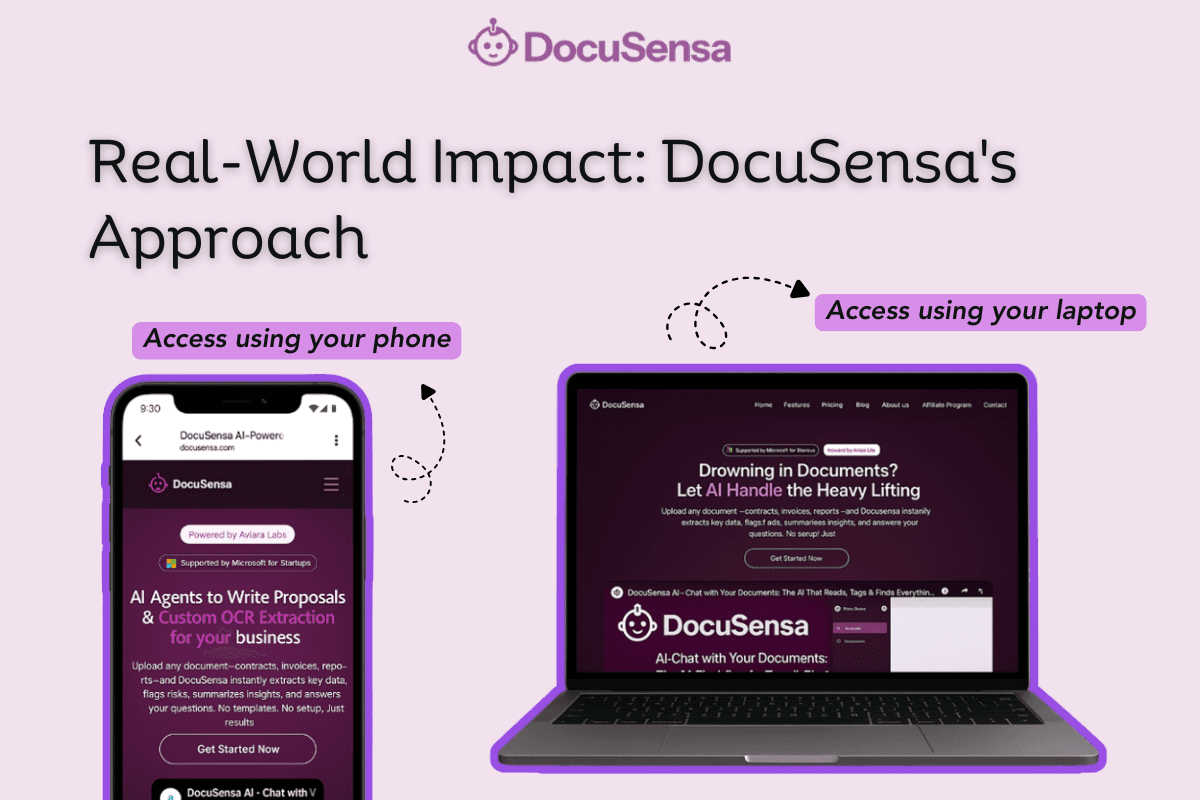
Real-World Impact: DocuSensa's Approach
DocuSensa's AI proposal platform exemplifies how technology streamlines the entire process. What once took hours of manual analysis now happens automatically. By automating document processing and content generation, teams can reduce response time by up to 90%, handle multiple simultaneous RFPs without adding staff, and deliver consistent, high-quality proposals every time.
Choosing the Right Document Type: A Decision Framework
For Buyers: When to Use Each Document
Issue an RFI when you need to:
Explore market capabilities before defining requirements
Identify qualified vendors for future opportunities
Validate technical feasibility of a concept
Educate stakeholders about available solutions
Issue an RFQ when:
You know exactly what you need
Products or services are standardized
Price is the primary decision factor
You need rapid procurement
Issue an RFP when:
Solutions require customization
Multiple vendors could deliver value
You need to evaluate methodology and approach
Projects involve significant complexity or investment
For Vendors: Strategic Response Decisions
Not every opportunity deserves a response. Evaluate each request by assessing your win probability—consider existing relationships, capability alignment, and evaluation criteria favorability. Calculate the hours required for a quality response and opportunity cost. Ask whether this client represents a target market segment, could create reference opportunities, or would enhance your capabilities.
Best Practices Across All Document Types
Regardless of whether you're responding to an RFI, RFQ, or RFP, certain principles apply universally. Before writing, ensure you thoroughly understand what the buyer needs. Follow instructions precisely—procurement officials often receive dozens of responses, and those that don't follow guidelines get eliminated immediately. Always demonstrate value by connecting your capabilities to the buyer's specific needs and desired outcomes. Generic, boilerplate content signals lack of genuine interest.
The Future of Procurement Documents
As AI proposal technology continues to evolve, we can expect increased personalization allowing more tailored responses at scale, faster procurement cycles reducing timelines from months to weeks, enhanced AI-powered evaluation to reduce bias and improve vendor selection, and greater transparency through automated compliance checking.
Conclusion: Mastering the Procurement Language
Understanding the distinctions between RFIs, RFQs, and RFPs isn't just about vocabulary—it's about strategic positioning and resource allocation. Each document type serves a specific purpose in the procurement lifecycle, and recognizing these differences enables you to respond more effectively and efficiently.
For organizations handling multiple solicitations simultaneously, leveraging AI for RFP responses isn't just a competitive advantage—it's becoming a necessity. Modern AI proposal generators like DocuSensa allow teams to maintain quality and personalization while dramatically accelerating response times and reducing manual effort.
Whether you're issuing or responding to procurement documents, clarity about these distinctions will improve your outcomes. And as AI continues to transform the bid and proposal landscape, those who embrace these tools while maintaining strategic human oversight will find themselves best positioned for success.
Ready to transform your proposal process? Discover how DocuSensa's AI-powered platform can help you respond to RFPs, RFIs, and RFQs faster and more effectively. Start your free trial today and join the 500+ teams already saving 20+ hours weekly while increasing their win rates.
Table of Content |
|---|
What Makes Each Document Unique |
Request for Information (RFI): The Discovery Phase |
When to Use an RFI |
Best Practices for RFI Responses |
Request for Quotation (RFQ): The Price-Focused Approach |
When to Issue an RFQ |
Crafting Effective RFQ Responses |
Request for Proposal (RFP): The Comprehensive Evaluation |
Essential Components of RFPs |
The RFP Response Challenge |
How AI is Transforming Proposal Development |
DocuSensa's AI Proposal Platform |
Choosing the Right Document Type |
Best Practices Across All Documents |
The Future of Procurement |
Mastering the Procurement Language |
RFP, RFI, and RFQ: Understanding the Difference
In the complex world of procurement and business proposals, three acronyms frequently cause confusion: RFP, RFI, and RFQ. Whether you're a seasoned procurement professional or new to the bid and proposal process, understanding these distinctions is crucial for success. This comprehensive guide breaks down each document type, explores their unique characteristics, and shows how modern AI proposal generators are transforming how businesses respond to these critical requests.
What Makes Each Document Unique?
Before diving into the specifics, it's essential to understand that RFPs (Requests for Proposal), RFIs (Requests for Information), and RFQs (Requests for Quotation) serve different purposes in the procurement lifecycle. Each document type has distinct business proposal characteristics that dictate how vendors should respond and what information buyers expect to receive.
Request for Information (RFI): The Discovery Phase
Purpose and Timing
An RFI is typically the first step in the procurement process. Organizations issue RFIs when they're exploring solutions but haven't yet defined their specific requirements. Think of an RFI as a discovery conversation—the buyer is gathering intelligence about what's available in the market, who the qualified vendors are, and what capabilities exist.
Key Characteristics of RFIs
Information Gathering Focus: Unlike formal bid proposals, RFIs don't require detailed pricing or implementation plans. Instead, they seek high-level information about:
Your company's background and capabilities
Product or service features and specifications
Technical requirements and infrastructure needs
Industry experience and relevant case studies
Potential approaches to solving the business challenge
Non-Binding Nature: RFIs are exploratory and non-committal. Responding to an RFI doesn't obligate you to submit a formal proposal later, and buyers aren't committing to work with any particular vendor at this stage.
Less Formal Structure: RFI responses typically don't require the extensive documentation found in formal business proposals, such as a detailed business proposal executive summary or comprehensive pricing tables.
When to Use an RFI
Organizations typically issue RFIs when:
They're unfamiliar with available solutions in the market
They need to understand industry capabilities before defining requirements
They want to identify qualified vendors for a future RFP
They're conducting market research for strategic planning
They need to validate feasibility before committing to a project
Best Practices for RFI Responses
Even though RFIs are less formal, they're your opportunity to make a strong first impression. Focus on:
Demonstrating Expertise: Showcase your industry knowledge and relevant experience without overwhelming the reader with unnecessary detail.
Being Transparent: If you don't offer certain capabilities, be honest. The RFI stage is about helping the buyer understand what's possible, not winning a contract.
Keeping It Concise: Provide enough information to demonstrate value without creating a lengthy document. Most effective RFI responses range from 10-20 pages.
Request for Quotation (RFQ): The Price-Focused Approach
Understanding the RFQ's Purpose
An RFQ is a straightforward pricing request issued when the buyer knows exactly what they need. The emphasis is almost entirely on cost, with minimal focus on methodology or creative solutions. RFQs are most common for commodity purchases, standardized services, or situations where specifications are clearly defined.
Distinguishing Features of RFQs
Pricing Emphasis: The primary objective is obtaining competitive pricing for well-defined products or services. A bid proposal template for an RFQ typically includes:
Itemized pricing for each product or service
Quantity-based pricing tiers
Delivery timelines and associated costs
Payment terms and conditions
Warranty or service agreement details
Minimal Qualitative Content: Unlike comprehensive proposals, RFQs don't typically require extensive business cover letters for proposals or detailed capability demonstrations. Buyers already understand what you do—they just need to know your pricing.
Quick Turnaround: RFQs often have shorter response deadlines (sometimes just days) because they require less research and customization than RFPs.
When Organizations Issue RFQs
RFQs are appropriate when:
Product or service specifications are completely defined
The buyer has used the solution before and knows what to expect
Price is the primary differentiator
Standardized goods or services are being purchased
Quick procurement decisions are necessary
Crafting Effective RFQ Responses
Competitive Pricing Strategy: Research market rates and position your pricing competitively while maintaining profitability. Understand your true costs and margin requirements.
Clear, Organized Presentation: Use the buyer's format exactly as specified. Create clean pricing tables that match their requested structure for easy comparison.
Transparent Terms: Clearly outline any conditions, minimum order quantities, volume discounts, or contract terms that affect pricing. Hidden costs or confusing terms will eliminate you from consideration.
Fast Response: Given the commodity nature of most RFQs, speed matters. Submit early to demonstrate responsiveness and operational efficiency.
Request for Proposal (RFP): The Comprehensive Evaluation
The RFP's Central Role
RFPs represent the most complex and comprehensive procurement document. Organizations issue RFPs when they need more than just a price quote—they want to evaluate your approach, methodology, team qualifications, and overall value proposition. Understanding the difference between contract and proposal becomes particularly important here, as successful RFP responses often lead directly to contract negotiations.
Essential Components of RFPs
Comprehensive Scope Definition: RFPs typically include:
Detailed project background and objectives
Specific technical and functional requirements
Evaluation criteria with weighted scoring
Submission guidelines and deadlines
Terms and conditions for the potential contract
Evaluation Beyond Price: While cost matters, RFPs evaluate multiple factors:
Technical approach and methodology (typically 25-40% of score)
Team qualifications and experience (15-25%)
Implementation timeline and project management (15-20%)
Past performance and references (10-15%)
Pricing and value proposition (20-30%)
Formal Structure Requirements: RFPs demand professional, comprehensive responses including:
A compelling business proposal executive summary
Detailed technical and management approaches
Team resumes and organizational charts
Case studies and client references
Comprehensive pricing with detailed breakdowns
Contract proposal examples or terms acceptance
The RFP Response Challenge
Responding to RFPs is resource-intensive and time-consuming. A typical mid-sized RFP response requires:
80-120 hours of team effort
Input from multiple departments (sales, technical, legal, finance)
Extensive customization and research
Rigorous review and quality control processes
This is where modern AI for RFP responses is revolutionizing the industry.
How AI is Transforming Proposal Development
The emergence of AI proposal generators has fundamentally changed how organizations approach the bid and proposal process, particularly for complex RFPs.
AI-Powered RFP Response Capabilities
Modern AI proposal tools can analyze incoming RFPs and automatically extract all requirements, categorize them by type, flag mandatory versus optional requirements, and identify potential risks in contract terms. AI for RFP responses can search your knowledge base for relevant past responses, generate first-draft answers, and ensure consistency across team members and proposals.
Real-World Impact: DocuSensa's Approach
DocuSensa's AI proposal platform exemplifies how technology streamlines the entire process. What once took hours of manual analysis now happens automatically. By automating document processing and content generation, teams can reduce response time by up to 90%, handle multiple simultaneous RFPs without adding staff, and deliver consistent, high-quality proposals every time.
Choosing the Right Document Type: A Decision Framework
For Buyers: When to Use Each Document
Issue an RFI when you need to:
Explore market capabilities before defining requirements
Identify qualified vendors for future opportunities
Validate technical feasibility of a concept
Educate stakeholders about available solutions
Issue an RFQ when:
You know exactly what you need
Products or services are standardized
Price is the primary decision factor
You need rapid procurement
Issue an RFP when:
Solutions require customization
Multiple vendors could deliver value
You need to evaluate methodology and approach
Projects involve significant complexity or investment
For Vendors: Strategic Response Decisions
Not every opportunity deserves a response. Evaluate each request by assessing your win probability—consider existing relationships, capability alignment, and evaluation criteria favorability. Calculate the hours required for a quality response and opportunity cost. Ask whether this client represents a target market segment, could create reference opportunities, or would enhance your capabilities.
Best Practices Across All Document Types
Regardless of whether you're responding to an RFI, RFQ, or RFP, certain principles apply universally. Before writing, ensure you thoroughly understand what the buyer needs. Follow instructions precisely—procurement officials often receive dozens of responses, and those that don't follow guidelines get eliminated immediately. Always demonstrate value by connecting your capabilities to the buyer's specific needs and desired outcomes. Generic, boilerplate content signals lack of genuine interest.
The Future of Procurement Documents
As AI proposal technology continues to evolve, we can expect increased personalization allowing more tailored responses at scale, faster procurement cycles reducing timelines from months to weeks, enhanced AI-powered evaluation to reduce bias and improve vendor selection, and greater transparency through automated compliance checking.
Conclusion: Mastering the Procurement Language
Understanding the distinctions between RFIs, RFQs, and RFPs isn't just about vocabulary—it's about strategic positioning and resource allocation. Each document type serves a specific purpose in the procurement lifecycle, and recognizing these differences enables you to respond more effectively and efficiently.
For organizations handling multiple solicitations simultaneously, leveraging AI for RFP responses isn't just a competitive advantage—it's becoming a necessity. Modern AI proposal generators like DocuSensa allow teams to maintain quality and personalization while dramatically accelerating response times and reducing manual effort.
Whether you're issuing or responding to procurement documents, clarity about these distinctions will improve your outcomes. And as AI continues to transform the bid and proposal landscape, those who embrace these tools while maintaining strategic human oversight will find themselves best positioned for success.
Ready to transform your proposal process? Discover how DocuSensa's AI-powered platform can help you respond to RFPs, RFIs, and RFQs faster and more effectively. Start your free trial today and join the 500+ teams already saving 20+ hours weekly while increasing their win rates.
Table of Content |
|---|
What Makes Each Document Unique |
Request for Information (RFI): The Discovery Phase |
When to Use an RFI |
Best Practices for RFI Responses |
Request for Quotation (RFQ): The Price-Focused Approach |
When to Issue an RFQ |
Crafting Effective RFQ Responses |
Request for Proposal (RFP): The Comprehensive Evaluation |
Essential Components of RFPs |
The RFP Response Challenge |
How AI is Transforming Proposal Development |
DocuSensa's AI Proposal Platform |
Choosing the Right Document Type |
Best Practices Across All Documents |
The Future of Procurement |
Mastering the Procurement Language |
RFP, RFI, and RFQ: Understanding the Difference
In the complex world of procurement and business proposals, three acronyms frequently cause confusion: RFP, RFI, and RFQ. Whether you're a seasoned procurement professional or new to the bid and proposal process, understanding these distinctions is crucial for success. This comprehensive guide breaks down each document type, explores their unique characteristics, and shows how modern AI proposal generators are transforming how businesses respond to these critical requests.
What Makes Each Document Unique?
Before diving into the specifics, it's essential to understand that RFPs (Requests for Proposal), RFIs (Requests for Information), and RFQs (Requests for Quotation) serve different purposes in the procurement lifecycle. Each document type has distinct business proposal characteristics that dictate how vendors should respond and what information buyers expect to receive.
Request for Information (RFI): The Discovery Phase
Purpose and Timing
An RFI is typically the first step in the procurement process. Organizations issue RFIs when they're exploring solutions but haven't yet defined their specific requirements. Think of an RFI as a discovery conversation—the buyer is gathering intelligence about what's available in the market, who the qualified vendors are, and what capabilities exist.
Key Characteristics of RFIs
Information Gathering Focus: Unlike formal bid proposals, RFIs don't require detailed pricing or implementation plans. Instead, they seek high-level information about:
Your company's background and capabilities
Product or service features and specifications
Technical requirements and infrastructure needs
Industry experience and relevant case studies
Potential approaches to solving the business challenge
Non-Binding Nature: RFIs are exploratory and non-committal. Responding to an RFI doesn't obligate you to submit a formal proposal later, and buyers aren't committing to work with any particular vendor at this stage.
Less Formal Structure: RFI responses typically don't require the extensive documentation found in formal business proposals, such as a detailed business proposal executive summary or comprehensive pricing tables.
When to Use an RFI
Organizations typically issue RFIs when:
They're unfamiliar with available solutions in the market
They need to understand industry capabilities before defining requirements
They want to identify qualified vendors for a future RFP
They're conducting market research for strategic planning
They need to validate feasibility before committing to a project
Best Practices for RFI Responses
Even though RFIs are less formal, they're your opportunity to make a strong first impression. Focus on:
Demonstrating Expertise: Showcase your industry knowledge and relevant experience without overwhelming the reader with unnecessary detail.
Being Transparent: If you don't offer certain capabilities, be honest. The RFI stage is about helping the buyer understand what's possible, not winning a contract.
Keeping It Concise: Provide enough information to demonstrate value without creating a lengthy document. Most effective RFI responses range from 10-20 pages.
Request for Quotation (RFQ): The Price-Focused Approach
Understanding the RFQ's Purpose
An RFQ is a straightforward pricing request issued when the buyer knows exactly what they need. The emphasis is almost entirely on cost, with minimal focus on methodology or creative solutions. RFQs are most common for commodity purchases, standardized services, or situations where specifications are clearly defined.
Distinguishing Features of RFQs
Pricing Emphasis: The primary objective is obtaining competitive pricing for well-defined products or services. A bid proposal template for an RFQ typically includes:
Itemized pricing for each product or service
Quantity-based pricing tiers
Delivery timelines and associated costs
Payment terms and conditions
Warranty or service agreement details
Minimal Qualitative Content: Unlike comprehensive proposals, RFQs don't typically require extensive business cover letters for proposals or detailed capability demonstrations. Buyers already understand what you do—they just need to know your pricing.
Quick Turnaround: RFQs often have shorter response deadlines (sometimes just days) because they require less research and customization than RFPs.
When Organizations Issue RFQs
RFQs are appropriate when:
Product or service specifications are completely defined
The buyer has used the solution before and knows what to expect
Price is the primary differentiator
Standardized goods or services are being purchased
Quick procurement decisions are necessary
Crafting Effective RFQ Responses
Competitive Pricing Strategy: Research market rates and position your pricing competitively while maintaining profitability. Understand your true costs and margin requirements.
Clear, Organized Presentation: Use the buyer's format exactly as specified. Create clean pricing tables that match their requested structure for easy comparison.
Transparent Terms: Clearly outline any conditions, minimum order quantities, volume discounts, or contract terms that affect pricing. Hidden costs or confusing terms will eliminate you from consideration.
Fast Response: Given the commodity nature of most RFQs, speed matters. Submit early to demonstrate responsiveness and operational efficiency.
Request for Proposal (RFP): The Comprehensive Evaluation
The RFP's Central Role
RFPs represent the most complex and comprehensive procurement document. Organizations issue RFPs when they need more than just a price quote—they want to evaluate your approach, methodology, team qualifications, and overall value proposition. Understanding the difference between contract and proposal becomes particularly important here, as successful RFP responses often lead directly to contract negotiations.
Essential Components of RFPs
Comprehensive Scope Definition: RFPs typically include:
Detailed project background and objectives
Specific technical and functional requirements
Evaluation criteria with weighted scoring
Submission guidelines and deadlines
Terms and conditions for the potential contract
Evaluation Beyond Price: While cost matters, RFPs evaluate multiple factors:
Technical approach and methodology (typically 25-40% of score)
Team qualifications and experience (15-25%)
Implementation timeline and project management (15-20%)
Past performance and references (10-15%)
Pricing and value proposition (20-30%)
Formal Structure Requirements: RFPs demand professional, comprehensive responses including:
A compelling business proposal executive summary
Detailed technical and management approaches
Team resumes and organizational charts
Case studies and client references
Comprehensive pricing with detailed breakdowns
Contract proposal examples or terms acceptance
The RFP Response Challenge
Responding to RFPs is resource-intensive and time-consuming. A typical mid-sized RFP response requires:
80-120 hours of team effort
Input from multiple departments (sales, technical, legal, finance)
Extensive customization and research
Rigorous review and quality control processes
This is where modern AI for RFP responses is revolutionizing the industry.
How AI is Transforming Proposal Development
The emergence of AI proposal generators has fundamentally changed how organizations approach the bid and proposal process, particularly for complex RFPs.
AI-Powered RFP Response Capabilities
Modern AI proposal tools can analyze incoming RFPs and automatically extract all requirements, categorize them by type, flag mandatory versus optional requirements, and identify potential risks in contract terms. AI for RFP responses can search your knowledge base for relevant past responses, generate first-draft answers, and ensure consistency across team members and proposals.
Real-World Impact: DocuSensa's Approach
DocuSensa's AI proposal platform exemplifies how technology streamlines the entire process. What once took hours of manual analysis now happens automatically. By automating document processing and content generation, teams can reduce response time by up to 90%, handle multiple simultaneous RFPs without adding staff, and deliver consistent, high-quality proposals every time.
Choosing the Right Document Type: A Decision Framework
For Buyers: When to Use Each Document
Issue an RFI when you need to:
Explore market capabilities before defining requirements
Identify qualified vendors for future opportunities
Validate technical feasibility of a concept
Educate stakeholders about available solutions
Issue an RFQ when:
You know exactly what you need
Products or services are standardized
Price is the primary decision factor
You need rapid procurement
Issue an RFP when:
Solutions require customization
Multiple vendors could deliver value
You need to evaluate methodology and approach
Projects involve significant complexity or investment
For Vendors: Strategic Response Decisions
Not every opportunity deserves a response. Evaluate each request by assessing your win probability—consider existing relationships, capability alignment, and evaluation criteria favorability. Calculate the hours required for a quality response and opportunity cost. Ask whether this client represents a target market segment, could create reference opportunities, or would enhance your capabilities.
Best Practices Across All Document Types
Regardless of whether you're responding to an RFI, RFQ, or RFP, certain principles apply universally. Before writing, ensure you thoroughly understand what the buyer needs. Follow instructions precisely—procurement officials often receive dozens of responses, and those that don't follow guidelines get eliminated immediately. Always demonstrate value by connecting your capabilities to the buyer's specific needs and desired outcomes. Generic, boilerplate content signals lack of genuine interest.
The Future of Procurement Documents
As AI proposal technology continues to evolve, we can expect increased personalization allowing more tailored responses at scale, faster procurement cycles reducing timelines from months to weeks, enhanced AI-powered evaluation to reduce bias and improve vendor selection, and greater transparency through automated compliance checking.
Conclusion: Mastering the Procurement Language
Understanding the distinctions between RFIs, RFQs, and RFPs isn't just about vocabulary—it's about strategic positioning and resource allocation. Each document type serves a specific purpose in the procurement lifecycle, and recognizing these differences enables you to respond more effectively and efficiently.
For organizations handling multiple solicitations simultaneously, leveraging AI for RFP responses isn't just a competitive advantage—it's becoming a necessity. Modern AI proposal generators like DocuSensa allow teams to maintain quality and personalization while dramatically accelerating response times and reducing manual effort.
Whether you're issuing or responding to procurement documents, clarity about these distinctions will improve your outcomes. And as AI continues to transform the bid and proposal landscape, those who embrace these tools while maintaining strategic human oversight will find themselves best positioned for success.
Ready to transform your proposal process? Discover how DocuSensa's AI-powered platform can help you respond to RFPs, RFIs, and RFQs faster and more effectively. Start your free trial today and join the 500+ teams already saving 20+ hours weekly while increasing their win rates.
Table of Content |
|---|
What Makes Each Document Unique |
Request for Information (RFI): The Discovery Phase |
When to Use an RFI |
Best Practices for RFI Responses |
Request for Quotation (RFQ): The Price-Focused Approach |
When to Issue an RFQ |
Crafting Effective RFQ Responses |
Request for Proposal (RFP): The Comprehensive Evaluation |
Essential Components of RFPs |
The RFP Response Challenge |
How AI is Transforming Proposal Development |
DocuSensa's AI Proposal Platform |
Choosing the Right Document Type |
Best Practices Across All Documents |
The Future of Procurement |
Mastering the Procurement Language |
RFP, RFI, and RFQ: Understanding the Difference
In the complex world of procurement and business proposals, three acronyms frequently cause confusion: RFP, RFI, and RFQ. Whether you're a seasoned procurement professional or new to the bid and proposal process, understanding these distinctions is crucial for success. This comprehensive guide breaks down each document type, explores their unique characteristics, and shows how modern AI proposal generators are transforming how businesses respond to these critical requests.
What Makes Each Document Unique?
Before diving into the specifics, it's essential to understand that RFPs (Requests for Proposal), RFIs (Requests for Information), and RFQs (Requests for Quotation) serve different purposes in the procurement lifecycle. Each document type has distinct business proposal characteristics that dictate how vendors should respond and what information buyers expect to receive.
Request for Information (RFI): The Discovery Phase
Purpose and Timing
An RFI is typically the first step in the procurement process. Organizations issue RFIs when they're exploring solutions but haven't yet defined their specific requirements. Think of an RFI as a discovery conversation—the buyer is gathering intelligence about what's available in the market, who the qualified vendors are, and what capabilities exist.
Key Characteristics of RFIs
Information Gathering Focus: Unlike formal bid proposals, RFIs don't require detailed pricing or implementation plans. Instead, they seek high-level information about:
Your company's background and capabilities
Product or service features and specifications
Technical requirements and infrastructure needs
Industry experience and relevant case studies
Potential approaches to solving the business challenge
Non-Binding Nature: RFIs are exploratory and non-committal. Responding to an RFI doesn't obligate you to submit a formal proposal later, and buyers aren't committing to work with any particular vendor at this stage.
Less Formal Structure: RFI responses typically don't require the extensive documentation found in formal business proposals, such as a detailed business proposal executive summary or comprehensive pricing tables.
When to Use an RFI
Organizations typically issue RFIs when:
They're unfamiliar with available solutions in the market
They need to understand industry capabilities before defining requirements
They want to identify qualified vendors for a future RFP
They're conducting market research for strategic planning
They need to validate feasibility before committing to a project
Best Practices for RFI Responses
Even though RFIs are less formal, they're your opportunity to make a strong first impression. Focus on:
Demonstrating Expertise: Showcase your industry knowledge and relevant experience without overwhelming the reader with unnecessary detail.
Being Transparent: If you don't offer certain capabilities, be honest. The RFI stage is about helping the buyer understand what's possible, not winning a contract.
Keeping It Concise: Provide enough information to demonstrate value without creating a lengthy document. Most effective RFI responses range from 10-20 pages.
Request for Quotation (RFQ): The Price-Focused Approach
Understanding the RFQ's Purpose
An RFQ is a straightforward pricing request issued when the buyer knows exactly what they need. The emphasis is almost entirely on cost, with minimal focus on methodology or creative solutions. RFQs are most common for commodity purchases, standardized services, or situations where specifications are clearly defined.
Distinguishing Features of RFQs
Pricing Emphasis: The primary objective is obtaining competitive pricing for well-defined products or services. A bid proposal template for an RFQ typically includes:
Itemized pricing for each product or service
Quantity-based pricing tiers
Delivery timelines and associated costs
Payment terms and conditions
Warranty or service agreement details
Minimal Qualitative Content: Unlike comprehensive proposals, RFQs don't typically require extensive business cover letters for proposals or detailed capability demonstrations. Buyers already understand what you do—they just need to know your pricing.
Quick Turnaround: RFQs often have shorter response deadlines (sometimes just days) because they require less research and customization than RFPs.
When Organizations Issue RFQs
RFQs are appropriate when:
Product or service specifications are completely defined
The buyer has used the solution before and knows what to expect
Price is the primary differentiator
Standardized goods or services are being purchased
Quick procurement decisions are necessary
Crafting Effective RFQ Responses
Competitive Pricing Strategy: Research market rates and position your pricing competitively while maintaining profitability. Understand your true costs and margin requirements.
Clear, Organized Presentation: Use the buyer's format exactly as specified. Create clean pricing tables that match their requested structure for easy comparison.
Transparent Terms: Clearly outline any conditions, minimum order quantities, volume discounts, or contract terms that affect pricing. Hidden costs or confusing terms will eliminate you from consideration.
Fast Response: Given the commodity nature of most RFQs, speed matters. Submit early to demonstrate responsiveness and operational efficiency.
Request for Proposal (RFP): The Comprehensive Evaluation
The RFP's Central Role
RFPs represent the most complex and comprehensive procurement document. Organizations issue RFPs when they need more than just a price quote—they want to evaluate your approach, methodology, team qualifications, and overall value proposition. Understanding the difference between contract and proposal becomes particularly important here, as successful RFP responses often lead directly to contract negotiations.
Essential Components of RFPs
Comprehensive Scope Definition: RFPs typically include:
Detailed project background and objectives
Specific technical and functional requirements
Evaluation criteria with weighted scoring
Submission guidelines and deadlines
Terms and conditions for the potential contract
Evaluation Beyond Price: While cost matters, RFPs evaluate multiple factors:
Technical approach and methodology (typically 25-40% of score)
Team qualifications and experience (15-25%)
Implementation timeline and project management (15-20%)
Past performance and references (10-15%)
Pricing and value proposition (20-30%)
Formal Structure Requirements: RFPs demand professional, comprehensive responses including:
A compelling business proposal executive summary
Detailed technical and management approaches
Team resumes and organizational charts
Case studies and client references
Comprehensive pricing with detailed breakdowns
Contract proposal examples or terms acceptance
The RFP Response Challenge
Responding to RFPs is resource-intensive and time-consuming. A typical mid-sized RFP response requires:
80-120 hours of team effort
Input from multiple departments (sales, technical, legal, finance)
Extensive customization and research
Rigorous review and quality control processes
This is where modern AI for RFP responses is revolutionizing the industry.
How AI is Transforming Proposal Development
The emergence of AI proposal generators has fundamentally changed how organizations approach the bid and proposal process, particularly for complex RFPs.
AI-Powered RFP Response Capabilities
Modern AI proposal tools can analyze incoming RFPs and automatically extract all requirements, categorize them by type, flag mandatory versus optional requirements, and identify potential risks in contract terms. AI for RFP responses can search your knowledge base for relevant past responses, generate first-draft answers, and ensure consistency across team members and proposals.
Real-World Impact: DocuSensa's Approach
DocuSensa's AI proposal platform exemplifies how technology streamlines the entire process. What once took hours of manual analysis now happens automatically. By automating document processing and content generation, teams can reduce response time by up to 90%, handle multiple simultaneous RFPs without adding staff, and deliver consistent, high-quality proposals every time.
Choosing the Right Document Type: A Decision Framework
For Buyers: When to Use Each Document
Issue an RFI when you need to:
Explore market capabilities before defining requirements
Identify qualified vendors for future opportunities
Validate technical feasibility of a concept
Educate stakeholders about available solutions
Issue an RFQ when:
You know exactly what you need
Products or services are standardized
Price is the primary decision factor
You need rapid procurement
Issue an RFP when:
Solutions require customization
Multiple vendors could deliver value
You need to evaluate methodology and approach
Projects involve significant complexity or investment
For Vendors: Strategic Response Decisions
Not every opportunity deserves a response. Evaluate each request by assessing your win probability—consider existing relationships, capability alignment, and evaluation criteria favorability. Calculate the hours required for a quality response and opportunity cost. Ask whether this client represents a target market segment, could create reference opportunities, or would enhance your capabilities.
Best Practices Across All Document Types
Regardless of whether you're responding to an RFI, RFQ, or RFP, certain principles apply universally. Before writing, ensure you thoroughly understand what the buyer needs. Follow instructions precisely—procurement officials often receive dozens of responses, and those that don't follow guidelines get eliminated immediately. Always demonstrate value by connecting your capabilities to the buyer's specific needs and desired outcomes. Generic, boilerplate content signals lack of genuine interest.
The Future of Procurement Documents
As AI proposal technology continues to evolve, we can expect increased personalization allowing more tailored responses at scale, faster procurement cycles reducing timelines from months to weeks, enhanced AI-powered evaluation to reduce bias and improve vendor selection, and greater transparency through automated compliance checking.
Conclusion: Mastering the Procurement Language
Understanding the distinctions between RFIs, RFQs, and RFPs isn't just about vocabulary—it's about strategic positioning and resource allocation. Each document type serves a specific purpose in the procurement lifecycle, and recognizing these differences enables you to respond more effectively and efficiently.
For organizations handling multiple solicitations simultaneously, leveraging AI for RFP responses isn't just a competitive advantage—it's becoming a necessity. Modern AI proposal generators like DocuSensa allow teams to maintain quality and personalization while dramatically accelerating response times and reducing manual effort.
Whether you're issuing or responding to procurement documents, clarity about these distinctions will improve your outcomes. And as AI continues to transform the bid and proposal landscape, those who embrace these tools while maintaining strategic human oversight will find themselves best positioned for success.
Ready to transform your proposal process? Discover how DocuSensa's AI-powered platform can help you respond to RFPs, RFIs, and RFQs faster and more effectively. Start your free trial today and join the 500+ teams already saving 20+ hours weekly while increasing their win rates.
Want more insights like this?
Want more insights like this?
Want more insights like this?
DocuSensa helps teams write faster, smarter Proposals with AI
DocuSensa helps teams write faster, smarter Proposals with AI
DocuSensa helps teams write faster, smarter Proposals with AI
Schedule a Call
Schedule a Call
Schedule a Call